
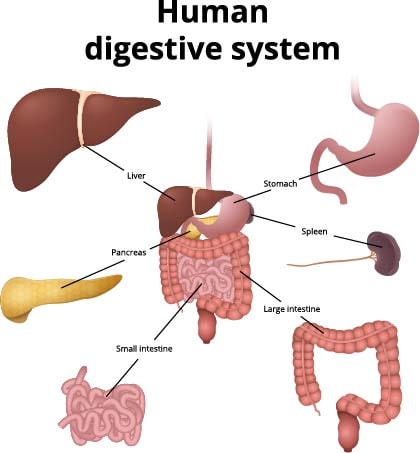
The gastrointestinal system (GI) tract serves as another battleground of root cause mold toxicity. Mold attacks in a variety of ways on this battleground which is intimately connected to the fight in other body systems. First, mold toxins often trigger intestinal hyperpermeability otherwise known as leaky gut. As toxins pass through the intestines, they can trigger histamine release from mast cells. This process further contributes to leaky gut. Second, mold toxins may cause direct damage to the cells lining the GI tract. This furthers inflammation and leaky gut severity. Third, mold toxins sometimes disrupt the normal bacterial balance in the gut. The gut lining then loses this normally protective bacterial layer. Fourth, mold may trigger food sensitivities via the immune system, and this then amplifies the histamine release and intensifies leaky gut. The different system effects are interconnected in multiple ways.
In the first mechanism, mold affects immune cells called mast cells which line our Gi tract’s mucosal surface. Mast cells act as on site sergeants of our immune defenses, using a variety of chemicals to direct where other immune cells go and which cells can get into the tissues around the mast cell. One of their chemical signals is histamine, but they have many tools at their disposal. Mold toxins make these mast cells more irritable in a sense, and thus more likely to release their chemicals. With such a release, more immune cells can enter that gut tissue for addressing infections or toxins, but when mold is the trigger, it causes more harm than good. The histamine also makes the gut lumen barrier more leaky so that chemicals normally kept in the stool lumen are allowed into the tissues and the blood stream. This then triggers more inflammation and allows disruptive chemicals into the body that otherwise would have passed through the GI tract into the toilet.
In the second mechanism, the toxins of mold whether coming in the food itself or through the blood stream can directly irritate the cells lining the gut lumen. When this happens, the cells tasked with separating the gut lumen and its stool contents from the blood stream intended to carry nutrients is compromised. Just like with the histamine triggered leaky gut, chemicals enter which should be kept out.
In the third mechanism, mold toxins act more in line with their true biologic purpose, that of serving as antibiotic defenses. Mold organisms are fighting for survival by fighting for water and food sources. If a bunch of bacteria start growing nearby, such critical necessities can be stolen, so they make toxins to kill off neighbors like bacteria. When these toxins are ingested, they can impact on our gut bacteria just like if they were growing in the wall of a water damaged building. Some bacteria are killed by the toxins and some are not. In the end our microbiome changes over time, often for the worse. This state of imbalanced gut bacteria is called dysbiosis. With such imbalances, other GI dysfunction can ensue including leaker gut.
In the fourth mechanism, mold toxins induce our immune system including the earlier mentioned mast cells to react to various foods in ways that it should not. Our immune system is constantly monitoring what comes through our GI tract, but distinguishes effectively between safe nutrients/food and dangerous substances. If the immune system becomes confused, then its reactions can lead to more histamine. More histamine leads to leakier gut and dysfunction.
The gut lining inflammation and leakiness then hinders the GI tract from proper functioning. Digestion may not fully process foods, causing key nutrients to pass through unabsorbed. With imbalances in good gut bacteria, detoxification of other environmental toxins may falter, allowing the toxic load to increase. With bacteria imbalances, harmful bacteria can increase and release various substances that harm local and distant body regions. Then with a growing number of food sensitivities, nutrient deficiencies become inevitable when patients are limited to only a few tolerated foods. Given the GI tract’s connection to every other body system and their proper functioning, it is easy to see how mold’s attacks here could influence the whole person’s well-being.